Between & Beyond 22 yards with Nosthush Kenjige (US, MI Emirates, MI New York)
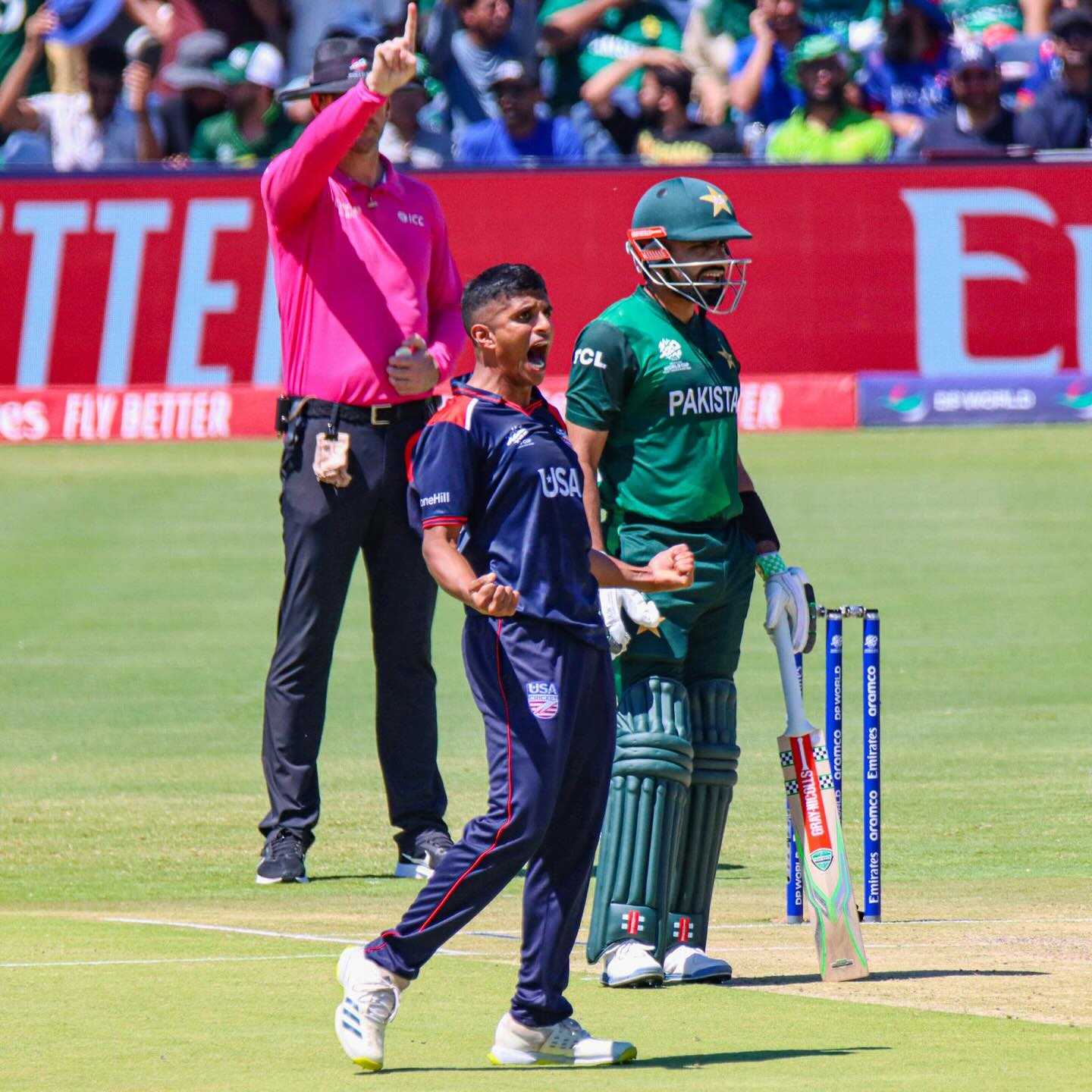
RN: Nosh, you picked up 3-30 vs Pakistan in the recent T20 World Cup on home soil that contributed to an upset win over a test playing nation. What was it like to be an American cricketer that day?
NK: We went into the World cup with a lot of self belief knowing that we would do something special. We were coming on the back of beating Bangladesh in a T20 series and we played some intelligent and fearless cricket with absolutely nothing to lose. Nobody expected us to win and it was just a case of us expressing ourselves and living the moment.
The game was also special as I was playing on my home ground in Dallas. My family and friends flew down from all over and I think it will be a memory etched in my heart forever. It has to be one of the most intense games I have played, opening the bowling to batters I have watched on TV was just an unreal feeling. We grew up watching Pakistan and India play in tense battles and I am very grateful to have had the opportunity to battle against them on such a world stage.
It also caught the imagination of the Americans who were new to cricket. They loved the entertainment, the uncertainties of a super over and the whole underdog story, so it’s a very special feeling to be part of a game that will be in the history books. I hope it leads to bigger and better things to come for the game in the US.
RN: What was it like bowling alongside one of the best modern day white ball spinners, Rashid Khan, at MI New York recently?
NK: For starters, I would not do justice if I don’t mention what a humble and genuine human being he is outside of cricket. His attitude and fighting belief that he brings into every battle stand out and makes him a world beater.
Getting to explore the mind of the best spinner was a fascinating experience. We would discuss strengths and weaknesses of batters and the kind of lines to bowl to each batter in different scenarios. For example, if Faf Du Plessis got going, the plan was to bowl at the wide line since he doesn’t cut (3 men behind point in the ring). He likes to drag it towards long on and mid wicket. The plan worked & we had success against him.
Rashid helped me understand how I can create doubts in the batter’s mind using angles and speed variations. It was really heartening to celebrate the success together at MI.
RN: The introduction of the MiLC (Minor League Cricket) and the MLC (Major League Cricket) has generated interest across the globe with plenty of aspiring & out of favour cricketers wanting to consider a move to the US. You are one of the few US born cricketers in the team. What are some of the challenges involved with being a professional cricketer in the US ?
NK: Being born and brought up here in the States is a disadvantage due to the infrastructure and the lack of professionalism in the local cricketing circles. The lack of turf wickets for training and games, lack of competitive cricket around the year makes it harder to compete against someone who has gained exposure competing in foreign conditions. It gives some of them an advantage being part of a system that builds all the cricketing etiquettes. Also, financially, it is not the most rewarding so cricketers have to look at part time gigs like coaching on the side.
MiLC and MLC have started addressing the issue over the last couple of years by building stadiums and high quality turf wickets . They have also started handing out yearly contracts which have had a positive impact. Things are starting to look up and I personally believe cricket is about to take off in the US. It is an exciting time for any aspiring cricketer with the 2026 T20 World Cup and the LA 2028 Olympics on the horizon.
Both leagues have created a pathway and a structure that have paved a path for the youngsters to learn and play alongside the best in the world. There is more interest than ever for professional cricketers from around the world to move to the US.